Paperwork is still a routine part of HR, from employee contracts and payslips to leave records and other employment documents. Without a proper document management system, storing, finding and sharing these records can take up valuable time and create unnecessary administrative work.
For Kenyan businesses, moving these processes online also makes sense as digital adoption continues to grow. By June 2025, Kenya had 58.5 million data subscriptions, up 27.3% from the previous year, while smartphone penetration reached 83.5%.
With the right document management system, businesses can create a more efficient, secure and organised way of managing employee records. But what is HR document management software, and how can businesses in Kenya use it effectively?
In this article, we explain what HR document management software is, why it matters, the key features to look for, and how to move from paper-based files to a cloud-based system.
Key Facts: HR Document Management Software
- What it is: HR document management software centralises the storage, organisation, signing and sharing of employee and company records in a secure, searchable digital system.
- Digital adoption: Kenya had 58.5 million data subscriptions by June 2025, with 78.2% on mobile broadband.
- Employment records: Kenya’s Employment Act requires employers to maintain written employee records covering areas including contracts, leave, sick leave, wages and disciplinary matters.
- Data protection: Kenya’s Data Protection Act applies to personal data handled by organisations, making secure access and responsible handling of employee information an important consideration for HR teams. The ODPC had received 7,128 complaints by March 2025, highlighting the growing importance of data protection and accountability.
- Electronic records: Kenyan law recognises electronic records where they remain accessible and usable for subsequent reference, subject to the requirements set out in the law.
What Is an HR DMS?
HR document management software is a digital system for storing, managing, signing and sharing employee and company documents. Instead of relying on filing cabinets, spreadsheets and email attachments, HR teams can keep contracts, employee records, payslips and other documents in one central location.
Cloud-based systems allow authorised users to access documents from wherever they are working, making them particularly useful for businesses with distributed or hybrid teams.
Electronic records and signatures are also legally recognised in Kenya. The Kenya Information and Communications Act provides for the legal recognition of electronic records and advanced electronic signatures, subject to specified requirements.
Why Should Businesses Automate Document Management?
There are several reasons Kenyan businesses are moving away from paper-based HR administration.
Increased reliability
Keeping employee documents in one organised system makes it easier for HR teams and managers to find and share the information they need. Whether the document is a contract, onboarding form, leave record or payslip, a centralised system reduces unnecessary back and forth.
Compliance and audit readiness
Kenyan employers are required to keep written employee records under the Employment Act, including information relating to contracts, leave, sick leave, wages and disciplinary matters.
A digital document management system can make these records easier to organise, retrieve and review when required.
Cost-effective
Going digital can reduce the costs associated with printing, photocopying, physical storage and manually retrieving documents. Employees can also access documents themselves rather than relying on HR to locate and send them.
Increased security
Employee records contain sensitive personal information. A digital system can restrict access based on user permissions and provide a clearer record of who has accessed or changed a document.
This is particularly important in Kenya, where organisations handling employee information must consider their obligations under the Data Protection Act. The ODPC reported 7,128 complaints by March 2025, demonstrating the growing attention being placed on personal data protection.
Supports a more digital workplace
Kenya’s digital infrastructure continues to expand. By June 2025, smartphone penetration had reached 83.5%, while total data subscriptions stood at 58.5 million.
For businesses, this makes cloud-based HR tools increasingly practical for managing documents and employee information.
How do you implement a document management system?
Moving from paper files to digital document management does not need to happen all at once.
Organise your documents
Start by identifying the types of documents your HR team manages, such as contracts, employee IDs, payslips, leave records and performance documents. Create a clear structure for storing them.
Upload existing records
Digitise important paper records and upload them into your document management system. Where possible, use bulk uploads to make the process quicker.
Give employees access
Let employees know where their documents are stored and how they can access them. Employee self-service can reduce the number of routine requests handled by HR.
Set access and retention rules
Decide who can view, edit, approve or delete different types of documents. This helps protect sensitive employee information and supports good data governance.
What features should you look for in HR document management software?
When choosing HR document management software in Kenya, look for:
| Feature | What it does |
|---|---|
| Document repository | Centralises all files in a searchable digital archive |
| E-signature | Enables legally binding digital signatures |
| Automated workflows | Triggers actions based on document events |
| Access management | Controls who can view, edit, or sign documents |
| Version control & audit trails | Tracks every change and user action |
| Bulk actions | Applies changes to multiple documents at once |
| HRIS/payroll integrations | Syncs document data with HR and payroll systems |
Kenyan law recognises electronic records where they can be accessed and used for subsequent reference, while electronic signatures can satisfy certain signature requirements when the applicable legal conditions are met.
Factorial's HR Document Management Tool
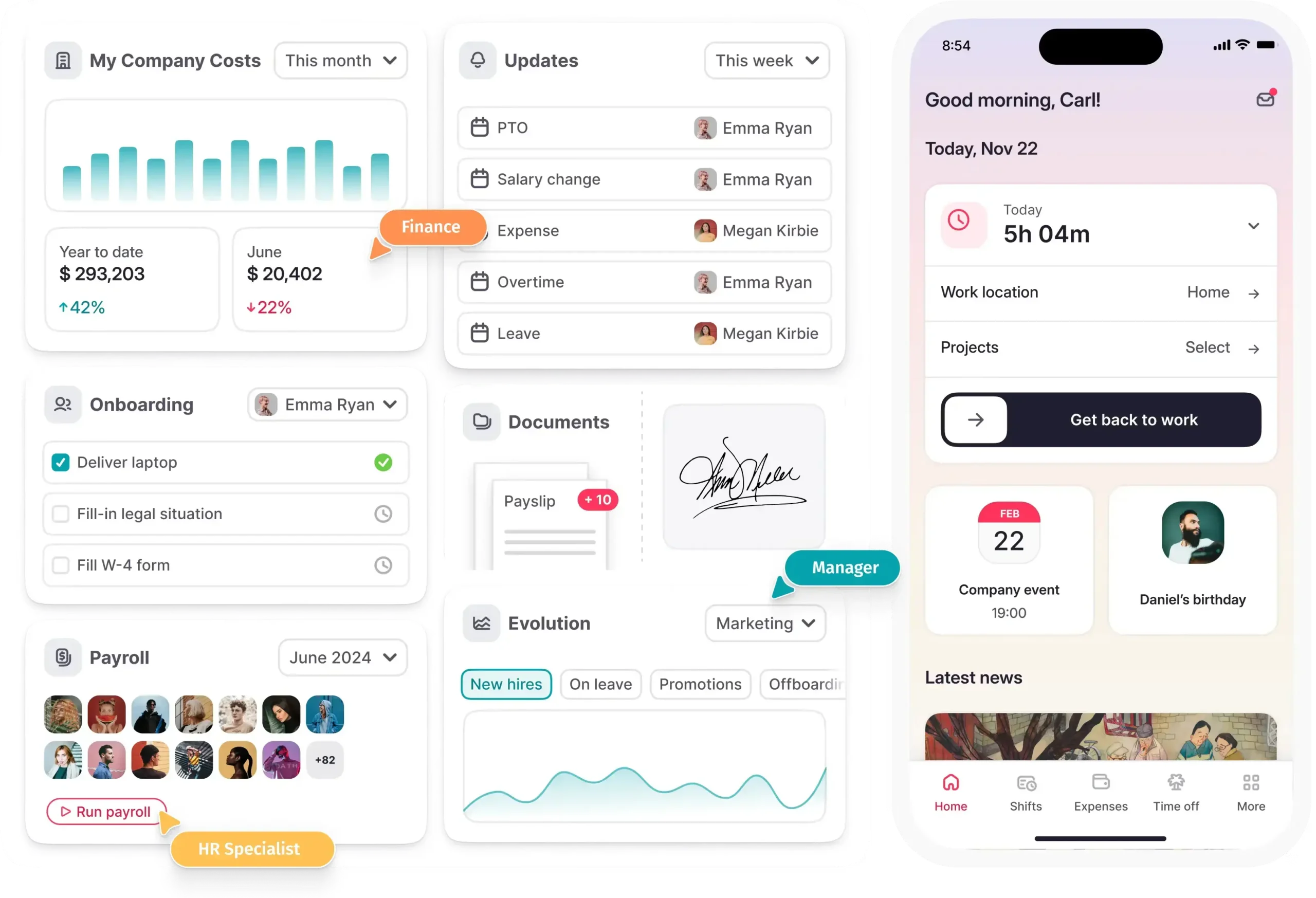
Factorial’s document management software helps businesses store, organise, sign and manage employee documents digitally. HR teams can create custom access permissions, request documents, manage approvals and keep employee records in one central location.
For Kenyan businesses looking to reduce paperwork, improve access to employee records and create more organised HR processes, a digital document management system can provide a simpler alternative to relying on physical files and disconnected tools.
FAQs
What are the top 5 document management systems?
The best document management systems offer a central repository, e-signatures, automated workflows, and secure access controls. For an integrated solution, Factorial’s all-in-one business management software includes these essential features, helping businesses manage documents securely and efficiently from a single location.
What is the difference between CMS and DMS?
A Document Management System (DMS) is used to store and manage internal business documents like contracts and employee files. In contrast, a Content Management System (CMS) is designed to create, manage, and publish digital content for external audiences, such as websites and blogs.
What is an example of a document management system?
An example is the document management tool within an all-in-one business management software like Factorial. It provides a secure, cloud-based repository for employee files, contracts, and payslips, and includes features like e-signatures and automated workflows to simplify processes.
What is DMS document management?
DMS, or Document Management Software, is a paperless system that centralises an organisation’s document processes. It is used to securely store, manage, share, and track business files, such as employee records and contracts, in order to improve efficiency and security.
What is the document management system for HR?
A document management system for HR is a specialised tool for securely handling all employee-related files, including contracts, payslips, and onboarding paperwork. Factorial’s all-in-one business management software includes a robust DMS designed for HR, centralizing documents and automating workflows for greater efficiency.