The rules governing how Kenyan businesses manage their finances changed significantly between 2024 and 2026. KRA’s eTIMS mandate made every expense and invoice a compliance document. The Affordable Housing Levy, SHIF, and updated PAYE bands added new layers of payroll complexity. And with the Office of the Data Protection Commissioner in active enforcement mode, how your finance team stores financial and employee data is no longer just an IT concern. As a result, more businesses are investing in finance and accounting software in Kenya to automate compliance, improve reporting accuracy, and manage payroll and financial operations more efficiently.
The right finance and accounting software in Kenya does more than balance the books. For your Kenyan team, it needs to handle multi-currency transactions, automate expense workflows, integrate with statutory payroll requirements, generate audit-ready reports, and keep your sensitive financial data secure. This guide ranks the top finance and accounting software options for Kenyan businesses, with a comparison chart, honest pros and cons, and pricing to help you choose the right fit.
What Is Finance and Accounting Software?
Finance and accounting software is a digital platform that enables your organisation to manage, track, and report on financial operations. For Kenyan businesses, the most relevant capabilities include:
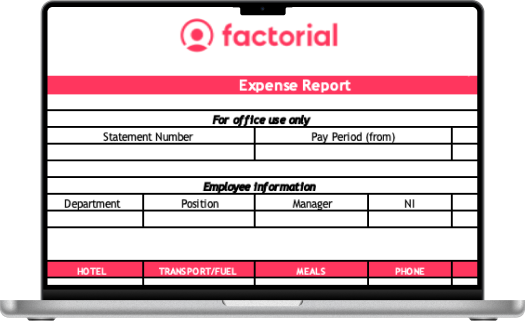
- Expense management: capturing, categorising, and approving employee expenses with receipt attachments and policy enforcement, replacing the manual reimbursement workflows your finance team is probably still running today
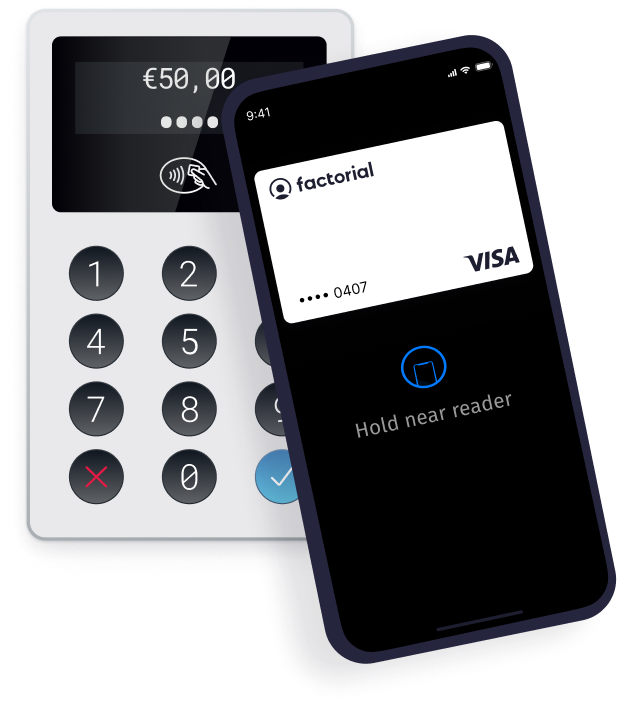
- Corporate cards: issuing physical and virtual cards to your employees with real-time spending controls, per-card limits, and automatic transaction categorisation
- Invoicing and accounts receivable: generating professional invoices, tracking payment status, and automating payment reminders so you get paid faster
- Bank reconciliation: automatically matching transactions from your bank feeds to accounting records, cutting the time your team spends on manual reconciliation
- Payroll integration: connecting your financial data to payroll deductions including PAYE, NSSF, SHIF, and the Affordable Housing Levy
- Compliance reporting: generating audit-ready financial statements, VAT returns, and eTIMS-compliant invoice records for KRA, so you are prepared when it matters
- Multi-currency accounting: managing transactions across currencies with real-time exchange rate updates, critical if your business operates across East Africa
- Digital signatures: approving financial documents, contracts, and expense claims with legally valid electronic signatures, removing the paper bottlenecks slowing down your finance workflows
The best finance software for accounting teams in Kenya moves beyond point solutions in any one of these areas and connects your financial management directly with HR and business operations.
Benefits of Finance and Accounting Software for Kenyan Businesses
When you invest in the right software for your finance team, the benefits show up across your whole operation, not just accounting.
- Automated expense management eliminates manual receipt collection, reimbursement delays, and policy violations. Your finance team gains real-time visibility into every spend without waiting for month-end expense reports.
- Corporate card controls give you granular oversight over employee spending. You can set per-card limits, block specific merchant categories, and approve or reject transactions in real time, from any device.
- Digital approval workflows replace paper-based document signing with audit-ready electronic approvals, cutting the time from expense submission to reimbursement from weeks to hours.
- KRA eTIMS compliance is built into the transaction layer, so every invoice and expense your business generates is captured, categorised, and stored in a format that supports KRA’s electronic tax validation requirements.
- Reduced finance workload through automation. Platforms that automate bank reconciliation, recurring invoices, and payment reminders can recover up to 40% of your finance team’s manual processing time.
- Integration with HR and payroll means your finance management becomes a connected part of the employee lifecycle, not a siloed function that is always playing catch-up with HR records.
Finance and Accounting Software Comparison Chart
Find the best finance and accounting software for your needs with this easy-to-use comparison chart.
| Software | Key Features |
Best For |
Pricing |
| Factorial | Expense management, corporate cards, digital signatures, project finance, HR integration, payroll, compliance reporting | SMEs and growing businesses wanting finance and HR in one suite | From $2/user/month |
| Zoho Books | Invoicing, bank reconciliation, expense tracking, multi-currency, VAT/GST, project accounting, Zoho ecosystem | Budget-conscious teams already using Zoho tools | Free plan; paid from $15/org/month |
| QuickBooks Online | Invoicing, expense tracking, bank feeds, payroll integration, inventory, 800+ app integrations | Small to mid-size businesses needing a widely-supported accounting platform | From $38/month (Simple Start) |
| Xero | Bank reconciliation, multi-currency, unlimited users, project tracking, 1,000+ app integrations | Growing teams needing unlimited users at a flat rate | From $25/month (Early) |
| Sage Intacct | Multi-entity consolidation, advanced automation, real-time reporting, audit trails, revenue recognition | Mid-market and enterprise finance teams with complex multi-entity needs | From $8,580/year |
Top Finance and Accounting Software for Kenyan Teams in 2026
Here is a quick overview of the top 7 finance and accounting software in Kenya, their key features, compliance with Kenyan regulatory laws, and pricing.
1. Factorial: Best Overall Finance and Accounting Software for Kenya

Factorial is the standout choice for Kenyan businesses in 2026 because it solves a problem that every other platform on this list cannot: it connects your financial management directly to HR and people operations, making expense workflows, corporate card controls, digital approvals, and project finance fully integrated from the moment an employee joins your team to the moment they leave.
Factorial brings your entire financial operation into one place. The expense management software automates the full expense lifecycle from submission to reimbursement, with every expense stored as a KRA eTIMS-compliant record. Corporate cards give you real-time control over employee spending, with physical and virtual cards, instant transaction approvals, and automatic sync to your expense records. Digital signatures remove paper from your approval workflows entirely, creating a traceable, date-stamped audit trail that satisfies both internal and ODPC requirements. And the HR project management software connects your project budgets and team capacity directly to the same platform managing your payroll and HR.
Key Features: Expense management and automated reimbursements, physical and virtual corporate cards with real-time spend controls, digital signatures for financial and HR documents, project finance and budget tracking, payroll integration (PAYE, NSSF, SHIF, AHL), HR-connected financial workflows, audit-ready compliance reporting, ISO/IEC 27001:2023 certified data security, Kenya Data Protection Act 2019 aligned.
Pros:
- The only platform in this ranking that connects your finance management directly to HR, payroll, and people operations in one suite
- Corporate cards with real-time transaction controls eliminate manual expense reimbursement entirely
- Digital signatures remove paper from your financial approval workflows with full audit trails
- Expense management is eTIMS-aligned, supporting your KRA compliance requirements
- ISO/IEC 27001:2023 certification and SOC 2 Type I attestation meet Kenya Data Protection Act security standards
- Nairobi office and KEPSA partnership mean you get local support and implementation assistance
- $10 million AI Acceleration Fund covers up to 50% of your implementation costs if eligible
Pricing: From $2/user/month. Visit Factorial.ke to learn more.
2. Zoho Books

Zoho Books is a cloud-based finance and accounting software in Kenya built for small to medium-sized businesses that need comprehensive bookkeeping, invoicing, and financial management without the cost or complexity of enterprise software. In 2026, it sits at the intersection of affordability and depth, offering multi-currency invoicing, automated bank feeds, VAT and GST handling, and project accounting from a single dashboard.
Key Features: Invoicing and recurring billing, automated bank reconciliation, multi-currency support with real-time exchange rates, expense tracking and categorisation, VAT and tax return preparation, project accounting and time tracking, client portal, role-based user permissions, Zoho ecosystem integration (Zoho CRM, Zoho Inventory, Zoho Payroll).
Pros:
- Strong multi-currency accounting for businesses operating across East Africa
- Tight integration with the broader Zoho ecosystem if you are already using Zoho CRM or Zoho One
Cons:
- Support quality can be inconsistent for African markets
Pricing: Free plan available; paid plans from $15/organisation/month (billed annually).
3. QuickBooks Online

QuickBooks Online is one of the most widely used accounting platforms in the world, and its adoption in Kenya reflects that global footprint. For your small to mid-size Kenyan business, its key advantage is familiarity: most accountants, bookkeepers, and financial advisors your team works with already know the platform, which reduces your onboarding friction significantly.
Key Features: Invoicing and accounts receivable, expense tracking and bank feeds, bank reconciliation, inventory management (Plus and above), payroll integration, financial reporting (P&L, balance sheet, cash flow), tax preparation support, 800+ third-party app integrations.
Pros:
- Automatic deduction identification helps you prepare for tax obligations
Cons:
- No native HR integration, so your finance and people management stay entirely separate
- Budget for 10 to 15% annual price increases if you are planning multi-year use
Pricing: Simple Start from $38/month.
4. Xero

Xero is one of the finance softwares for teams in Kenya. Every Xero plan includes unlimited users at a flat monthly rate, which means your costs do not balloon as your finance team grows.
Key Features: Bank reconciliation with automated transaction matching, multi-currency accounting, unlimited users on all plans, invoicing and accounts payable, project tracking (Established plan), expense management (Established plan), 1,000+ app marketplace integrations, real-time accountant collaboration.
Pros:
- Strong bank reconciliation that matches your transactions automatically, reducing manual workload
Cons:
- The Early plan limits you to 20 invoices and 5 bills per month, which is too restrictive for most active Kenyan businesses
- No native HR integration, so your finance and people management stay in separate systems
Pricing: Early $25/month.
5. Sage Intacct

Sage Intacct is a cloud-based financial and accounting software in Kenya, built for organisations with complex, multi-entity accounting needs that go beyond what QuickBooks or Xero can handle. It is the right choice if you are running a mid-market company, a SaaS business, a nonprofit, or a growing enterprise that needs real-time consolidated reporting across multiple entities, locations, or currencies.
Key Features: Multi-entity and multi-currency consolidation, advanced automation, real-time financial reporting and dashboards, revenue recognition, accounts payable automation, audit trails, budgeting and planning, over 350 business application integrations, Sage Intacct Marketplace.
Pros:
- Real-time reporting and dashboards give your CFO and finance directors live financial visibility
- Strong audit trail and compliance reporting for regulated industries
Cons:
- Implementation complexity means you will likely need a Sage-certified partner to get started
- No native HR integration, so your finance and people management stay in separate systems
Pricing: From $8,580/year for a single user.
How to Choose the Right Finance Software for Your Kenyan Business
Not every finance and accounting software in Kenya is built for the Kenyan market. Here are four key factors to evaluate before you commit.
- Scope of coverage. Do you need expense management, corporate card controls, invoicing, full double-entry accounting, or all of the above? Choosing a platform that covers your current requirements and your next two to three years of growth saves you a costly migration later.
- HR and payroll integration. If your expense approvals are still handled by email, and your finance team is manually reconciling payroll deductions from a separate HR system, you are carrying both operational risk and compliance exposure. Platforms that connect finance management directly to HR and payroll workflows, as Factorial does, eliminate this gap entirely.
- KRA and Kenya Data Protection Act compliance. Every expense, invoice, and financial record is now a potential KRA audit document under the eTIMS mandate. Look for platforms with secure, audit-ready record storage, role-based access controls, and data handling practices that align with the Kenya Data Protection Act 2019.
- Total cost of ownership. Per-user, per-organisation, or per-entity pricing adds up quickly.
Factor in add-ons for expense management, multi-currency, payroll integrations, and premium support before you compare headline prices across platforms.
Why Factorial Is the Best Finance Software for Kenyan Teams in 2026
If you are comparing options, here is why Factorial stands apart from every other platform in this ranking.
- It is the only solution that connects your expense management, corporate cards, digital signatures, and project finance directly to HR, payroll, and people operations in a single Business Management Suite. Every other platform on this list manages finance in isolation.
- Factorial manages finance as an integrated part of how your business operates, from a new hire’s first expense claim to a departing employee’s card revocation, all automated, all compliant, all in one place.
- With a Nairobi office, a KEPSA partnership, a $10 million AI Acceleration Fund covering up to 50% of your implementation costs, and a starting price of $2/user/month as part of the full Factorial suite, there is no comparable combination of depth, local commitment, and value in the Kenyan finance software market today.
Explore Factorial’s finance tools at factorial.ke.

Finance and Accounting Software FAQs
Get answers to the most common questions about choosing Factorial as your finance and accounting software.
Yes, businesses in Kenya can use Factorial to streamline financial workflows, improve operational visibility, manage employee expenses, and connect finance processes with HR and business operations.
One of Factorial’s strengths is connecting HR and finance workflows. Businesses can manage employee information, onboarding, expenses, approvals, attendance, and reporting from a unified platform.
Factorial centralises business data and reporting, helping teams gain better visibility into workforce costs, operational performance, approvals, and business metrics.
Using a connected platform can reduce duplicate work, improve data accuracy, simplify processes, and create a more seamless experience across HR, finance, and operations teams.