Artificial intelligence is changing everything, and the financial sector is no exception. This technology is here to stay, offering a variety of solutions that optimize processes, improve decision-making, and increase operational efficiency. Therefore, for finance teams, adopting AI tools is both essential and strategic to remain competitive in a dynamic and fiercely competitive business environment.
Below, we present a selection of 40 artificial intelligence tools, organised by categories, capable of transforming your company’s financial management.
All-in-one expense management tool
1 Factorial
The first tool to mention is Factorial AI , the AI agent that allows you to maintain financial control with real-time data, automated processes, and forecasts to control your company’s expenses and make the best decisions.
This tool allows you to:
- Submit expenses faster with AI that extracts key data, reduces errors, and improves with each use. And it keeps sensitive data confidential.
- Improve your company’s profitability and financial management by understanding which areas generate the most profit and where to invest more.
- Manage your team’s expenses in real time thanks to our corporate cards, both physical and virtual.
- Synchronize expenses with payroll.
- Download the reports you need and analyze the impact of those expenses.
👉 Discover the full scope of Factorial AI
AI tools to automate financial processes
These tools automate repetitive and administrative tasks, freeing up time for activities of greater strategic value.
2 Vic.ai
An AI-native accounts payable platform that uses autonomous machine learning to process invoices without templates or manual coding rules. Vic.ai learns from a company’s historical approval patterns to make increasingly autonomous decisions on invoice coding, matching, and approval routing over time.
Advantages:
- Fully autonomous invoice processing that improves accuracy the longer it’s used, rather than relying on fixed OCR templates.
- Flags anomalies and potential duplicate or fraudulent invoices before payment.
- Integrates with major ERPs (NetSuite, Sage Intacct, Microsoft Dynamics) to close the loop between capture and posting.
3 Booke AI
An AI bookkeeping automation tool built for accountants and finance teams to auto-categorize transactions, reconcile books, and flag anomalies across multiple client accounts or business units.
Advantages:
- Learns categorization rules per business/client, reducing repetitive manual coding.
- Speeds up month-end close by pre-reconciling transactions before human review.
- Useful for agencies or finance teams managing multiple company books at once (relevant if positioning for multi-client or multi-entity Kenyan businesses).
4 Ramp
Beyond corporate cards, Ramp’s AI layer analyses spend data in real time to surface savings opportunities and automatically enforce policy at the point of transaction.
Advantages:
- Proactively identifies wasteful or duplicate recurring payments rather than catching them at month-end.
- Automates receipt matching and expense categorization with minimal manual review.
- Real-time policy enforcement reduces after-the-fact reconciliation work for finance teams.
👉 Download KRA PAYE Filing Checklist Kenya 2026
Tools for predictive analytics and risk management
Tools that use AI to predict financial trends and proactively manage risks.
5 Kyriba
A treasury and cash management platform that uses predictive analytics to forecast liquidity needs and manage financial risk exposure across multiple entities and currencies.
Advantages:
- Global bank connectivity through standardized formats like SWIFT lets treasurers view balances, initiate payments, and reconcile transactions across all accounts from a single interface.
- Tracks currency exposure across subsidiaries and recommends hedging strategies, then executes FX forwards and options directly through the platform.
- Well suited for businesses managing multi-currency exposure across African and international markets.
6 MindBridge
An AI-driven financial anomaly detection platform built for full-population risk analysis rather than sample-based auditing. MindBridge analyzes financial transactions to detect anomalies, fraud patterns, and compliance risks that traditional sampling methods might miss.
Advantages:
- Rather than testing a small sample of transactions, auditors can examine 100% of the data while focusing their time on the highest-risk items MindBridge surfaces.
- Reduces reliance on manual, sample-based audit checks that can miss risk signals.
- Useful for finance teams that need continuous monitoring rather than periodic audit cycles.
7 IBM Watson Studio
IBM Watson Studio enables data scientists to build and train artificial intelligence models. It facilitates collaboration and the deployment of AI solutions across diverse environments, optimizing processes and improving decision-making.
Advantages:
- It facilitates the creation of custom AI models.
- Integrate big data with financial machine learning.
- It improves the accuracy of risk detection.

Solutions for fraud detection and prevention
These tools help identify suspicious activity and prevent fraud.
8 Feedzai
A data science company combining real-time fraud prevention and AML compliance into one platform, used by banks and payment processors globally.
Advantages:
- Trusted by the world’s largest financial institutions, solving complex challenges from synthetic IDs and scams to card fraud and mule accounts.
- Scalable approach lets businesses start with targeted tools like behavioral biometrics and scale into full transaction decisioning.
- Modular design suits both retail banks and fast-growing fintechs.
9 SEON
A fraud management platform built around first-party, real-time digital signals rather than relying solely on historical transaction data.
Advantages:
- Covers the full customer journey from signup to transaction monitoring, blocking fraudulent accounts and reducing chargebacks.
- Customizable risk rules and explainable AI let fraud and AML teams understand exactly which signals drive each decision.
- Modular platform fits fintech, payments, and e-commerce businesses at different stages of growth.
10 NICE Actimize
An enterprise-grade financial crime detection platform built for banks handling high transaction volumes and complex fraud typologies.
Advantages:
- Supports external model imports, letting internal data science teams bring their own models alongside the platform’s native analytics.
- Pervasive AI capabilities allow institutions to detect fraud at speed and scale across multiple channels.
- Best suited to large banks and financial institutions that want enterprise flexibility rather than a fixed rules engine.
- Virtual assistants and financial chatbots

Tools that improve interaction with customers and employees through intelligent virtual assistants.
11 Safaricom’s Zuri
Safaricom’s chatbot for Facebook Messenger and Telegram, one of the earliest large-scale conversational assistants deployed in the Kenyan market for telco and mobile-money-adjacent support. Safaricom rolled out Zuri as a chatbot that assists customers on Facebook Messenger and Telegram.
Advantages:
- Early mover in Kenya’s chat-based customer service space, helping normalize chatbot interaction for financial and telco queries.
- Leverages platforms with very high local adoption (Messenger, Telegram) rather than a standalone app.
- Reduces call-center load for high-volume queries tied to M-Pesa-adjacent services.
12 KCB’s WhatsApp Digital Customer Service Platform
KCB Bank Kenya’s chat-based customer service integration on WhatsApp, designed to centralize customer care conversations on the platform with the highest penetration in Kenya.
Advantages:
- Consolidates multiple support channels into one hub, reducing fragmented customer service touchpoints.
- Built on a channel with near-universal reach in Kenya, lowering the barrier to adoption versus app-only banking.
- Frees human agents to focus on complex cases while routine queries are handled conversationally.
13 Equity Virtual Assistant (EVA)
Equity Bank’s AI-powered chat banking platform, available across WhatsApp, Facebook Messenger, and Telegram, built to bring core banking functions into the social media apps Kenyans already use daily.
Advantages:
- Uses artificial intelligence to constantly evolve and learn from customer interactions to improve its responses.
- Meets customers on already-adopted channels (WhatsApp, Messenger, Telegram) rather than requiring a separate app download.
- Part of Equity’s broader shift toward third-party and self-service digital channels, reflecting where Kenyan banking usage is already heading.
Software for managing investments and portfolios
Solutions that apply AI to optimize the management of investments and financial portfolios.
14 Ndovu
A CMA-licensed robo-advisor platform giving Kenyans access to diversified, professionally managed portfolios without needing deep market expertise.
Advantages:
- Comprehensive financial tools give users market analysis, portfolio management, and educational resources to enhance financial knowledge.
- Access to money market funds, Shariah-compliant funds, African and US government bonds, real estate, US stocks, and ETFs in one platform.
- Regulated by the Capital Markets Authority and subject to oversight from ICIFA, the Communications Authority, and the Nairobi Securities Exchange, giving it strong local trust signals.
15 Hisa App
A mobile and web trading platform focused on direct stock investing across multiple African and global markets, aimed at Kenyans who want active portfolio control rather than a managed fund.
Advantages:
- Supports fractional share investing, so users can own part of major companies without needing large starting capital.
- Provides access to over 6,000 global and local assets, including stocks, ETFs, REITs, and mutual funds, giving strong diversification for active investors.
- Low entry point (starting around $1) with educational content like podcasts and market news built in for newer investors.
16 Abacus
A multi–fund-manager investment platform aggregating access to shares, government securities, and unit trusts under one interface, useful for investors who want to compare options across providers rather than commit to a single asset manager.
Advantages:
- Aggregating multiple fund managers in one place simplifies comparison-shopping for Kenyan investors.
- Covers a wide asset mix (equities, government securities, unit trusts) rather than specializing narrowly.
- Useful entry point for investors who want breadth of choice before settling on a dedicated platform.
- Artificial intelligence tools for accounting and auditing
👉 Social Health Authority Compliance Checklist
Tools that automate accounting and auditing processes. In this way, they provide accuracy and control.
17 Trullion
An AI platform built specifically for audit-ready compliance work, extracting data from contracts and source documents to automate lease accounting and revenue recognition under formal accounting standards.
Advantages:
- Purpose-built for CFOs, controllers, and audit teams that need AI-driven compliance automation, not general bookkeeping.
- Ties extracted contract data directly to compliant reporting schedules, reducing manual audit prep.
- Strong fit for finance teams facing formal lease or revenue-recognition audit requirements.
18 Intuit QuickBooks
Intuit QuickBooks is an accounting solution that helps businesses manage income, expenses, and payroll. Its intuitive interface and numerous built-in features ensure more accurate and efficient financial management.
Advantages:
- Automatic categorization of operations.
- Customized financial reports.
- Cash flow management.
19 Numeric
An AI close-automation platform aimed at finance teams that want to compress the audit-heavy month-end close process and reconcile accounts with full traceability.
Advantages:
- Includes a technical accounting AI bot trained on GAAP guidance and public filings, answering questions across US GAAP, IFRS, and UK GAAP.
- Automates more than 90% of bank reconciliations and batch-posts journal entries with AI-drafted rules.
- Traceable, click-through investigation of discrepancies supports audit sign-off rather than replacing it.
- AI-powered solutions for financial planning and analysis
Tools that assist in financial planning and data analysis for strategic decision-making.
20 Planful
A financial performance management platform that unifies planning, consolidation, reporting, and analysis, with AI now embedded into the core forecasting workflow.
Advantages:
- Sits well for companies in the $100M–$2B range, sophisticated enough for multi-entity consolidation and rolling forecasts without Anaplan-level implementation complexity.
- Analyzes historical patterns and applies statistical models to generate rolling forecasts that update automatically as new actuals arrive.
- Typical deployment runs 2–4 months, replacing weeks of manual consolidation with automated data flows so FP&A teams can focus on analysis rather than compiling numbers.
21 Cube
An Excel- and Google Sheets-native FP&A platform that layers AI on top of spreadsheets teams already use, rather than requiring a full migration.
Advantages:
- Predictive forecasting and anomaly detection automatically flag outliers and unusual patterns before they escalate into risks.
- Frictionless integration with existing spreadsheets makes adoption easier for teams not ready to abandon Excel-based workflows.
- Finance-first design keeps the tool focused on FP&A use cases rather than general BI.
22 Vena Insights (Vena Copilot)
A Microsoft-ecosystem FP&A platform combining Excel and Power BI integration with AI agents for reporting, planning, and analysis.
Advantages:
- Reported 60% budgeting cycle reduction in Planning Agent beta testing.
- Familiar entry point for teams that want AI-driven FP&A without leaving the Microsoft 365 ecosystem.
- Combines predictive analytics, predictive forecasting, and anomaly detection in a single connected suite.
- Platforms for expense management and invoicing
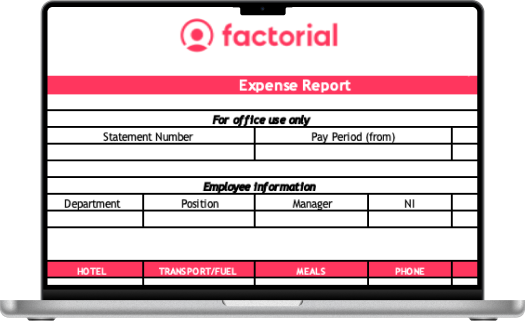
Solutions that automate expense management and billing processes and improve operational efficiency.
23 Expensify
Expensify empowers individuals and businesses to automate receipt capture, expense tracking, and report generation. Its app enables the digitization of receipts using optical character recognition (OCR), simplifying accounting and increasing efficiency.
Advantages:
- Automate receipt validation.
- It facilitates the reimbursement of business expenses.
- It integrates with accounting software.
24 Concur
Concur, part of SAP, offers a comprehensive platform for managing travel, expenses, and billing. Its integration with SAP provides companies with a unified view of their finances, improving control and transparency in financial processes.
Advantages:
- Manage travel and expenses on a single platform.
- Avoid errors in financial reports.
- It promotes compliance with spending policies.
25 Tickelia
Tickelia automates business expense management, from receipt capture to accounting and reimbursement.
Advantages:
- Automate the digitization of expense receipts.
- It automatically recovers the VAT.
- Greater traceability of corporate expenses.
- ERP – Integrated business management platforms
ERPs are systems that integrate multiple business processes, including finance, into a single platform.
26 Microsoft Dynamics 365 Finance
Dynamics 365 Finance is a module of Microsoft ‘s business suite offering solutions for financial and accounting management. Its key features include financial process automation, real-time analysis, and legal compliance.
Advantages:
- Optimize your financial planning.
- Automate bank reconciliation.
- Predicts cash flow trends.
27 SAP Finance
SAP Finance integrates processes on a single platform. Among other features, it offers real-time analytics, risk management, and regulatory compliance capabilities.
Advantages:
- Integrates AI to improve financial control.
- Automate profitability analysis.
- It facilitates real-time cost management.
28 Oracle ERP Cloud
Oracle ERP Cloud is a suite of cloud-based applications that covers everything from financial management to supply chain management. It offers AI and machine learning capabilities to automate processes and improve data accuracy, among other things.
Advantages:
- Reduce errors in accounting processes.
- Improves the accuracy of financial forecasts.
- Automate reports and audits.
- Artificial intelligence for credit management
These tools help assess credit risk and improve the efficiency of lending.
29 Zest AI
Zest AI uses machine learning to improve the accuracy of credit risk assessment. Its platform helps financial institutions develop more inclusive and accurate credit models, reducing risk and expanding access to financing.
Advantages:
- Predict credit risks with machine learning.
- Evaluate solvency more accurately.
- Improves fairness in the granting of loans.
30 Upstart
Upstart is a lending platform that uses AI to assess applicants’ creditworthiness. It considers factors beyond traditional credit history, such as education and employment. This makes the assessment more accurate and fair for evaluating credit risk.
Advantages:
- Analyze alternative variables for granting loans.
- Reduces default rates.
- Streamlines credit approval processes.
31 Kabbage
Kabbage provides lines of credit and loans to small and medium-sized businesses and quickly assesses risk using AI. Its platform automates the application and approval process, giving growing businesses rapid access to financing.
Advantages:
- Automate the granting of loans to SMEs.
- Evaluate payment capacity in real time.
- Integrates data into credit decision-making.
- Legal compliance and financial security software
Solutions that help companies comply with regulations and ensure the safety of their operations.
32 ComplyAdvantage
ComplyAdvantage helps companies comply with anti-money laundering and counter-terrorism financing laws.
Advantages:
- Detects money laundering risks.
- Automate legal compliance checks.
- Study the financial reputation of clients.
33 ThetaRay
ThetaRay provides AI-powered analytics solutions to detect suspicious activity and prevent fraud. Its technology analyzes massive volumes of data to immediately identify anomalies and potential threats.
Advantages:
- Identifies suspicious transactions.
- Minimize cybersecurity risks in banking.
- It improves fraud detection.
34 Peleza
Peleze helps Kenyan businesses comply with anti-money laundering and counter-terrorism financing laws under POCAMLA.
Advantages:
- Automates Customer Due Diligence, checking national IDs, alien IDs, and passports against AML and PEP lists in seconds.
- Screens buyers and sellers against global sanctions and PEP lists before money changes hands.
- Maintains a clear, logged audit trail of every check run, ready to show the FRC.
Tools to manage investments in cryptocurrencies and other digital assets with the support of AI.
35 Bitget
An AI-assisted copy trading platform with active presence in Kenya, including Bitget Pay for M-Pesa and bank transfers.
Advantages:
- Automates trade execution by following AI-scored expert trader strategies.
- Analyzes market patterns across spot, futures, and margin positions.
- Diversifies holdings across hundreds of altcoins from one dashboard.
36 eToro
Blends AI-driven CopyTrader tools with traditional and digital assets for Kenyan investors.
Advantages:
- Matches your portfolio with top-performing traders using automated pattern analysis.
- Diversifies risk by combining crypto with stocks and ETFs in one view.
- Simplifies rebalancing with a blended-portfolio dashboard.
37 Evai (via Bitlipa)
AI-powered crypto rating platform built to help Kenyan investors avoid scam tokens and make evidence-based decisions.
Advantages:
- Continuously evaluates crypto assets using machine learning and peer-reviewed financial research.
- Assigns unbiased risk ratings to flag scam or high-risk projects.
- Was made freely accessible to Kenyan users through a local exchange partnership, targeting Kenya’s high exposure to crypto fraud.
These tools help with tax returns, tax planning, and error detection.
38 Zoho Books (Kenya)
An eTIMS-compliant accounting software with Zia, Zoho’s built-in AI assistant, for KES-based Kenyan businesses.
Advantages:
- Zia monitors transactions continuously for anomalies and flags errors before they compound.
- Automates bank reconciliation and expense categorization, reducing manual entry mistakes.
- Delivers actionable insight and forecasts on cash flow, taxes, and profit and loss on demand.
39 KRA iTax + Shuru (AI assistant)
Kenya Revenue Authority’s own filing infrastructure, now backed by an AI-powered WhatsApp assistant for tax returns.
Advantages:
- Auto-populates income tax returns using eTIMS invoices, withholding tax certificates, and third-party bank data.
- Validates incomes and expenses automatically before filing to catch mismatches early.
- Files nil, individual, and (soon) more complex returns conversationally via WhatsApp.
40 Qwan
Kenya-native accounting platform built specifically around KRA and M-Pesa compliance, with AI business intelligence layered on top.
Advantages:
- Generates iTax-ready VAT reports and PIN-linked, eTIMS-compliant invoicing.
- Produces 30–90 day AI cash flow forecasts to support tax planning.
- Explains financial statements and flags discrepancies in plain language.
Factorial and its role with AI for financial management
These 40 AI tools demonstrate that this technology is radically changing corporate finance. With them, users automate processes, improve security, and optimise decision-making, from risk management to tax planning. Thus, AI brings solutions that facilitate the work of finance teams and increase efficiency.
However, many businesses need a platform that integrates all or many of these capabilities into a single system. This is where Factorial comes in , a key ally in your financial and business management.
While, as we’ve seen, there are specialised systems that add significant value in specific areas, Factorial goes further. It’s an AI-powered financial and HR management software that unifies and centralizes processes, optimizes workflows, and improves decision-making with real-time data. Therefore, it contributes globally, across all departments, and comprehensively to all types of businesses.
So, in conclusion, Factorial is the tool that will make your financial work, in particular, and your business work, in general, much easier . And, of course, it leverages the latest advances in AI.
AI Tools FAQS
Reputable platforms use encryption, secure data handling, and regulatory-compliant infrastructure. That said, always verify a tool is licensed or recognized in your jurisdiction before connecting real financial accounts or funds.
Most modern AI finance tools are built for non-experts, using plain-language explanations, automated categorization, and guided workflows so you don't need an accounting or coding background.
They can handle repetitive tasks such reconciliation, categorization, anomaly detection very well, but complex decisions (tax strategy, investment planning, compliance judgment calls) still benefit from professional review, especially where local regulations are involved.