The Hidden Cost of Running HR on Paper and Spreadsheets
Running HR on paper, spreadsheets, and memory doesn't just slow you down, it's quietly costing you money you can't see. Every reconciled attendance sheet, every re-typed payroll figure, and every missed statutory deadline chips away at time, accuracy, and trust, until a business that works fine at 15 employees starts breaking at 50.
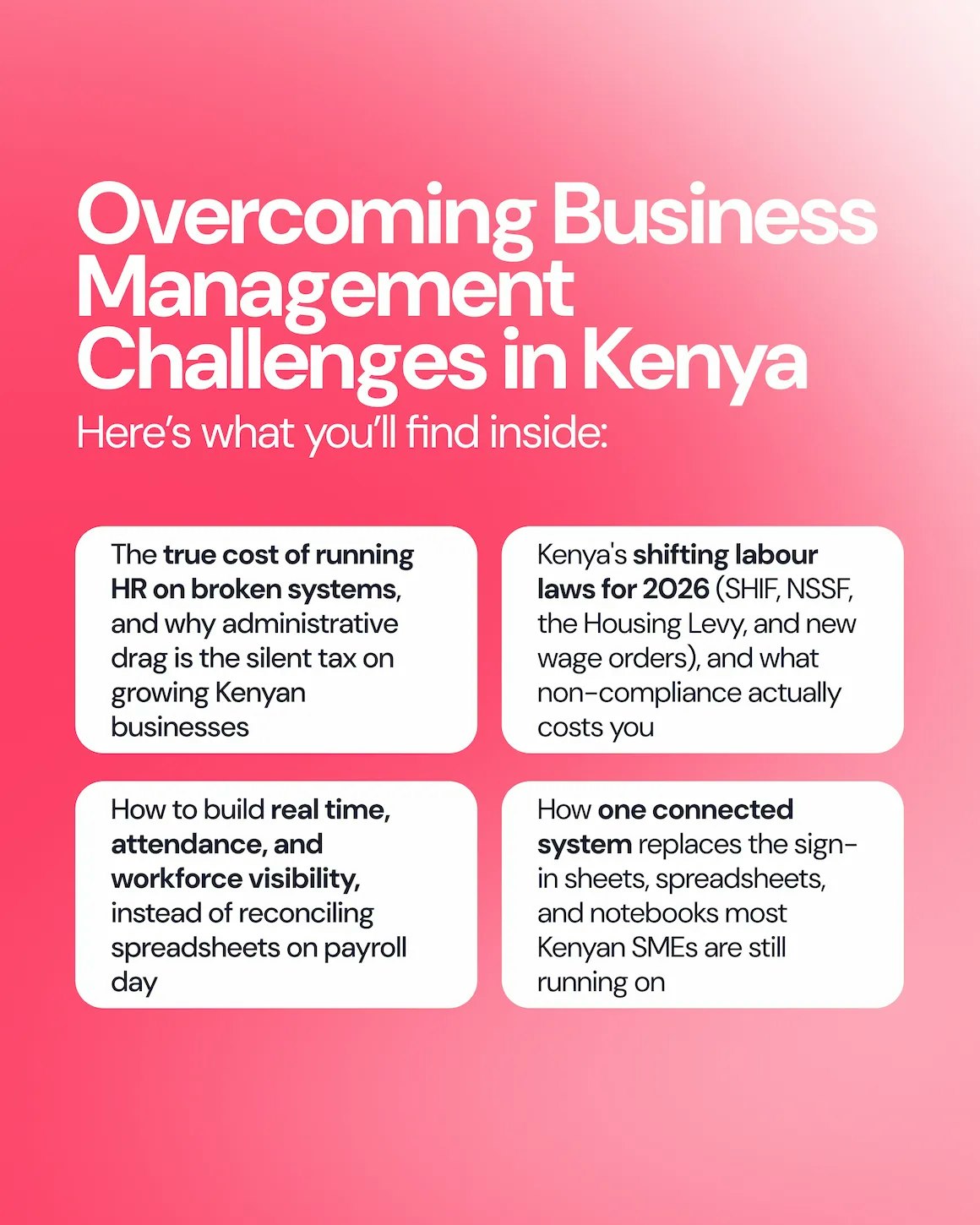
This playbook walks through where that drag really comes from and what to do about it: the true cost of running on broken systems, Kenya's shifting labour laws heading into 2026 (SHIF, NSSF, the Housing Levy, and new wage orders), how to build real workforce visibility, and how to attract and retain talent when budgets are tight. It's written for owners, HR leads, and operations managers running teams in Kenya, with every statistic sourced and dated for 2026. Download it to see where your business is exposed, and what to do about it.
Here's what running HR on broken systems is already costing Kenyan businesses:
12%
how much Kenya's minimum wage rose in May 2026, applied retroactively, meaning many employers already owe wage arrears.
KES 100,000
the fine for not having a signed, written contract for every employee past their second month (plus up to 2 years imprisonment).
79%
of skills-trained alumni who move into intermediate or senior roles within a few years, proof that structured onboarding pays off in retention.
What you will find inside this guide
Every Kenyan business running HR on paper and spreadsheets is carrying the same three risks at once: losing time and accuracy to manual processes, missing statutory changes that carry real financial and legal weight, and losing good people because no one is tracking the warning signs until it's too late.
This playbook translates those risks into a practical framework you can act on today. It covers what running on broken systems really costs you, the labour law changes reshaping payroll in 2026 (SHIF, NSSF, the Housing Levy, and new wage orders), and how to build the workforce visibility that turns payroll day from a scramble into a formality. Fixing HR admin isn't a one-off project. It's the operating system the rest of the business runs on.
Revolutionize your team’s experience and boost your business
Request a free Factorial demo so we can show you how to transform all your processes.
