A hybrid model of work is no longer a pandemic-era workaround. It is now a fixture of how Nairobi-based companies, and even county-level teams operate. But most organisations are running hybrid without the systems, policy, or legal grounding to support it properly. If you manage a hybrid team in Kenya right now, this is what you need to get right.
Hybrid work in Kenya, by the numbers
Kenya’s labour market has moved fast on flexible work, and the data backs it up.
- Kenya’s Communications Authority reported active mobile subscriptions hit 84.1 million in the third quarter of the 2025/2026 financial year, with mobile penetration climbing to 157.7 percent nationally.
- Yet DataReportal’s Digital 2026 report puts actual internet penetration at 40.5 percent of the population, with 23.4 million internet users as of late 2025. That gap between mobile penetration and real internet access is the single biggest operational risk for any hybrid policy that assumes uniform connectivity.
- KIPPRA’s analysis projects that hybrid work models could help formalise informal-sector jobs and cut organisational overhead costs by up to 30 percent, re-investable into growth.
- Kenya’s BPO sector, one of the biggest adopters of remote and hybrid arrangements, now employs more than 40,000 people, with the digital economy expected to reach roughly $23 billion by 2027.
This is a market where hybrid isn’t optional anymore. It’s the operating model. The question is whether your HR systems and policies were actually built for it, or whether you’re managing it with tools designed for a fully in-office team.

What “hybrid” actually means for a Kenyan team
Global hybrid-work content usually assumes two states: home or office. Kenyan teams are rarely that simple. A typical hybrid setup here includes:
- Rotating office days for HQ staff, common in Nairobi-based SaaS, fintech, and professional services firms.
- Field and on-site staff mixed with office staff, the norm in NGOs, logistics, and blue-collar-adjacent operations across counties.
- Fully remote roles tied to BPO or IT-enabled services, a segment growing fast enough that Parliament is now legislating around it directly.
Each of these needs a different management approach. Treating them as one policy is where most companies are already failing.
The core challenges you're actually managing
Connectivity gaps, not just preference. With internet penetration at 40.5 percent nationally and mobile broadband dominating access, “just join the call” isn’t a neutral instruction. Your hybrid policy has to account for uneven bandwidth, not assume it away.
1. A shifting legal floor. Kenya’s employment law around remote and hybrid work is moving right now, not settled. In July 2026, Parliament proposed amending the Employment Act so that remote workers, particularly in BPO and IT-enabled roles, are formally recognised as employees under Clause 10 of the bill, with employers required to provide the equipment and connectivity staff need to do their jobs. Separately, legal analysis from Wamae & Allen confirms that employees are no longer legally obligated to respond to work communications outside official hours unless there’s a defined emergency, meaning your after-hours WhatsApp culture may now carry legal exposure. EY’s review of the related right-to-disconnect proposals notes fines of up to KES 500,000 for non-compliance. If your hybrid policy doesn’t specify communication hours in writing, you’re exposed.
2. Visibility and trust across the split. Managers who can see one half of the team and not the other tend to default to presence-based judgement: rewarding whoever is physically in the room. That’s a fast way to burn out your top remote performers and lose them.
3. Payroll, leave, and attendance across dispersed teams. Manual tracking breaks down the moment your team isn’t all logging in from the same building. Fragmented systems create real payroll errors, and in a market where the labour law floor is actively shifting, undocumented attendance is a compliance risk, not just an admin headache.

Build the policy before you build the culture
A hybrid policy that actually holds up needs to specify, in writing:
- Core hours and communication windows, aligned with Kenya’s emerging right-to-disconnect standards.
- Which roles qualify for which hybrid model, rotating office days, field-based, or fully remote, and why.
- Equipment and connectivity provisions, since new legislative proposals are moving toward making this an employer obligation, not a nice-to-have.
- Leave, attendance, and performance documentation standards that apply equally regardless of where someone is working from.
Ad hoc hybrid, arrangements agreed informally between a manager and their team without a written policy, is the gap most Kenyan companies are currently operating in. It’s also the first thing that falls apart when a labour dispute or an audit shows up.
The systems layer: where most hybrid setups actually break
Policy only works if you can enforce and track it. That means one system of record for:
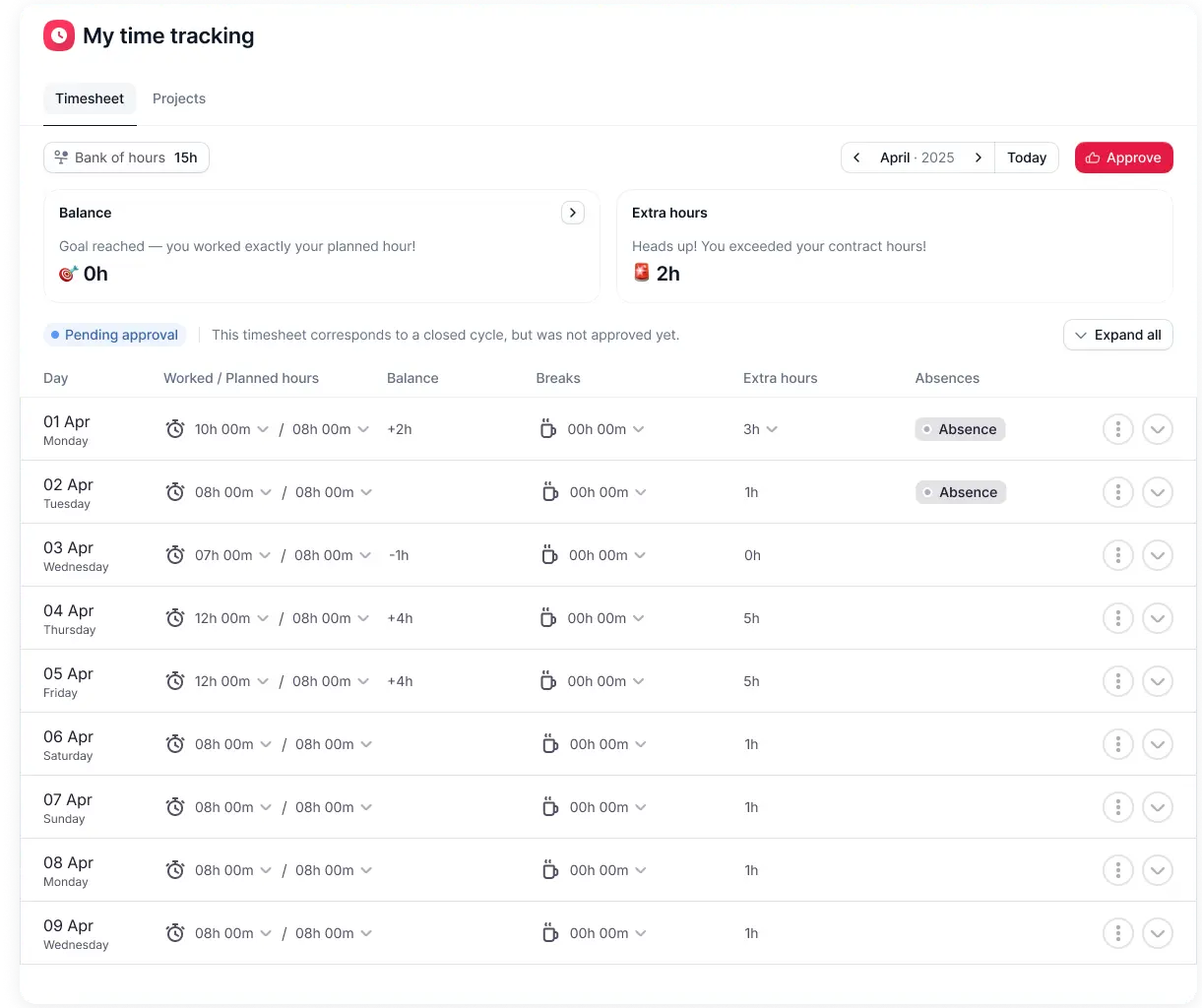
- Attendance, so you’re not reconciling five different check-in methods across office and field staff.
- Leave management, applied consistently whether someone works from Westlands or Kisumu.
- Performance reviews, based on output and documented check-ins, not visibility bias.
This is the exact gap Factorial’s HR platform is built to close for hybrid teams in Kenya, one system covering attendance, leave, and performance across dispersed staff, so hybrid stops being something you manage around and starts being something you actually manage.
Culture and communication, made concrete
- Set async-first norms for anything that doesn’t need real-time back-and-forth. Not every update needs a meeting.
- Protect meeting-free blocks, especially for staff balancing field and remote schedules.
- Give remote and field staff equal visibility in decisions, recognition, and promotion conversations. Presence bias is the fastest way to quietly demote your remote team to second-class status.
Your one-question audit
If you can’t answer this right now, that’s your gap:
Can you tell us, without checking five different places, exactly who on your team worked yesterday, from where, and for how long?
If the answer is not clear and direct, your hybrid model is running on goodwill, not systems. Factorial gives HR teams the attendance, leave, and performance infrastructure to close that gap, so you can manage a hybrid team with the same clarity you’d have if everyone sat in one room.

Hybrid Model of Work FAQs
HR software simplifies hybrid work by centralising attendance, leave, performance, and employee records. Factorial helps HR teams manage both remote and in-office employees from one platform.
Attendance can be tracked using digital check-ins, time tracking, and leave management tools. With Factorial, HR teams can monitor attendance in real time, regardless of where employees are working.
Focus on goals, outcomes, and regular feedback rather than hours worked. Factorial's Performance Management tools help managers set objectives, conduct reviews, and track employee progress.
HR software reduces manual processes, improves visibility across distributed teams, and enhances the employee experience. Factorial provides everything businesses need to manage a hybrid workforce in one place.