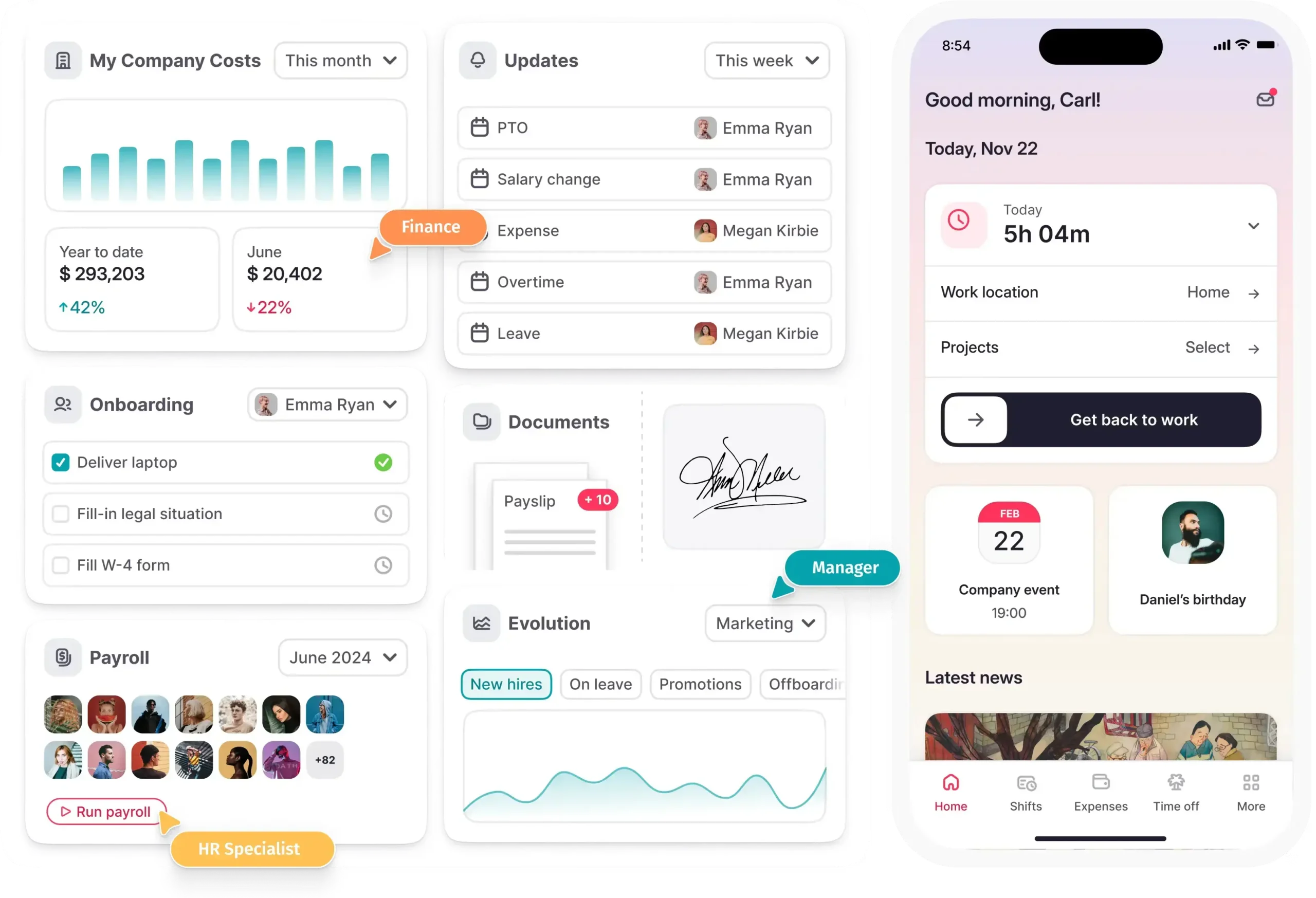
Choosing HR software is often the easy part. The harder part starts after you sign the contract.
Employee data needs to be prepared and migrated. Existing HR processes need to be mapped to the new system. Payroll and statutory settings need to be configured correctly. Integrations need to work. Your HR and payroll teams need to be trained, while managers and employees need to understand how their day-to-day experience will change.
If these steps aren’t handled properly, even the right HR software can become another source of manual work, errors and frustration.
The problem is often not the technology itself. HR software implementations can become a struggle because of poor processes, inaccurate data, incorrect configuration or insufficient testing before go-live.
That’s why having a clear HR software implementation guide can help your team approach the transition systematically, rather than trying to solve problems as they appear.
What Does HR Software Implementation Involve?
HR software implementation involves setting up and introducing a new HR system so that it works with your organisation’s people, processes and existing systems.
It involves much more than creating employee profiles and giving your team access. A typical implementation covers planning and assigning ownership, preparing and migrating employee data, configuring the system, setting up integrations, checking compliance requirements, testing payroll and other workflows, training users, and managing the transition to the live system.
The exact timeline will depend on your organisation, the complexity of your data and how prepared you are before implementation begins. A thorough implementation can take several weeks, particularly when payroll, integrations and testing are involved.
The key is to approach implementation in clear phases, making sure the critical work is completed before moving to the next stage.
How to Implement HR Software Successfully
A successful implementation starts with getting the basics right. Before you begin, make sure you have:
- A clear owner: Assign someone to manage the implementation and make key decisions.
- The right people involved: Bring HR, finance, IT and relevant managers into the process early.
- Clean data: Review employee records and resolve duplicates, outdated information and inconsistencies before migration.
- Correct configuration: Make sure payroll and statutory settings are configured and checked against current requirements.
- Proper testing: Run parallel payroll cycles and test different employee scenarios before going live.
- User training: Make sure HR, managers and employees understand how they’ll use the new system before launch.
These steps give you the foundation for a smoother implementation, but keeping track of everything across each stage can still be challenging.
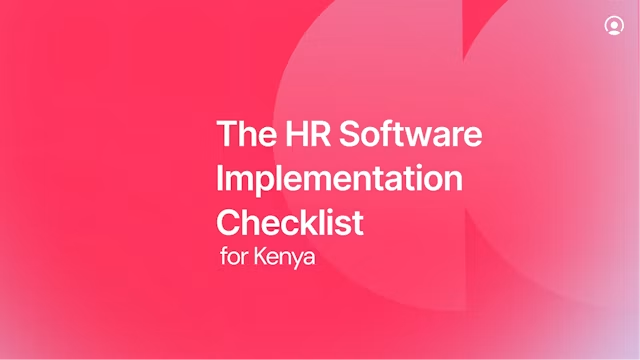
For a more detailed, phase-by-phase approach, see Factorial’s HR Software Implementation Checklist
What’s in the HR Software Implementation Checklist?
You’ve now seen what it takes to move from selecting HR software to successfully going live. But keeping track of all these steps can be difficult, especially when implementation involves multiple teams and moving parts.
The HR Software Implementation Checklist brings the process together into one practical resource, giving HR teams and business leaders a structured way to work through their implementation.
What’s in this checklist?
The checklist covers:
- Pre-implementation & planning
- Data migration & system setup
- Integration & compliance checks
- Testing & training
- Go-live & post-launch
- Final go-live readiness checks
It’s designed to take you from signing your HR software contract through to your first stable payroll run.
How Factorial helps
Choosing the right HR software is only one part of the process. How smoothly you implement it can determine how quickly your team starts seeing value from the platform.
With Factorial’s presence in East Africa, there’s focus on helping businesses move from manual and fragmented HR processes to more connected, digital workflows. Factorial has also partnered with the Kenya Private Sector Alliance (KEPSA) to support workforce digitisation and productivity among Kenyan businesses.
This focus is backed by implementation support. Instead of simply handing your team a login and leaving you to figure out the rest, Factorial supports businesses through configuration and parallel testing, helping teams move from setup to adoption with greater confidence.
With HR, payroll and related people processes brought together on one connected platform, your teams can work from a central system rather than managing employee information across disconnected tools.
The goal isn’t simply to get your new HR software up and running. It’s to help your team get value from it from day one.