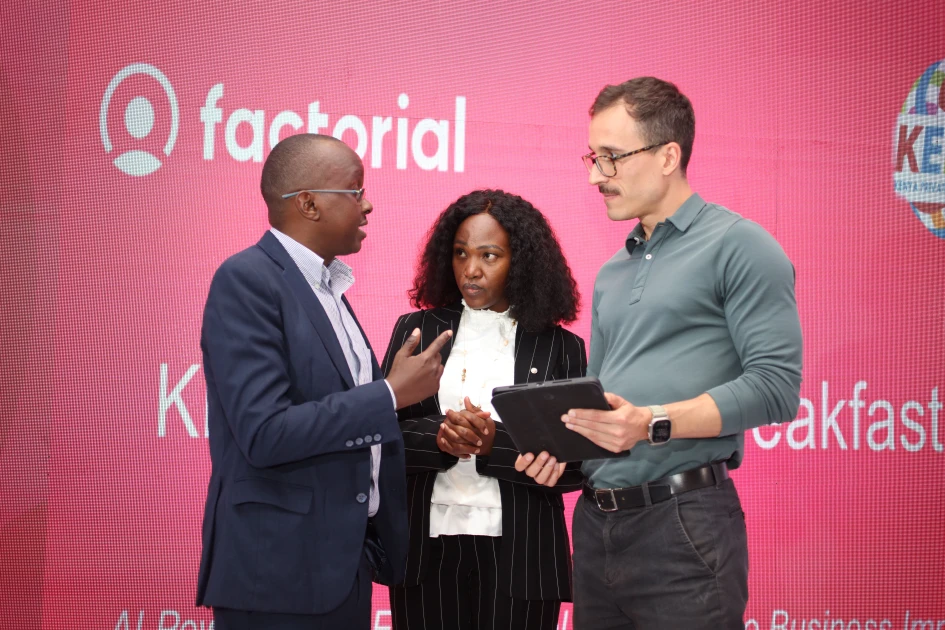
Jordi Romero founded Factorial, a software platform designed to help HR teams improve their management. Since then, the company has grown to operate in more than 90 countries and has raised over $490 million in funding. For Jordi, HR strategies should focus on growth, innovation, and attracting top talent—a crucial vision given that global employee engagement is projected to fall by 20% by 2025, costing $10 trillion in lost productivity.
Key data
- The CEO’s vision on HR: For Jordi Romero, the People team must cover three pillars in order of priority: administrative and legal compliance, attracting and retaining the best talent, and transmitting the organisational culture.
- The cost of disengagement: According to Gallup, global job commitment fell to 20% in 2025, its lowest level since 2020, with an estimated cost of $10 trillion in lost productivity for the global economy.
- Administrative burden as a strategic obstacle: 46% of recruitment managers identify workload management as their main personal obstacle, according to SHRM, confirming that administrative tasks consume resources that should be allocated to people strategy.
- CEO-HR alignment as a priority: More than 61% of CEOs highlight financial competence as a critical area that HR directors must develop to better support the organisation, according to SHRM.
This is the view of a technologist, an executive, a founder who says, we’re not doing well enough, we need to do better.
Jordi is immersed in the world of Human Resources on a daily basis. Therefore, he understands the administrative demands placed on a human resources team.
I’ve developed a great deal of respect for the amount of work involved as the team grows. We’ve experienced it firsthand.
In the early days of Factorial, there was only one person in charge of managing payroll, registering employees, writing job offers, buying laptops for onboarding , etc. Naturally, as the company grew, the management became exponentially more complex.
A CEO so involved in the Human Resources of his company understands the very important strategic role that a People team plays, as well as the incredible work involved in managing the paperwork or administrative tasks of the company.
What is a CEO's vision for Human Resources in 2026?
For Jordi, the truth is that when you start a business with a small team and you have to serve a client, develop your product, pay salaries, and buy a laptop for the newest employee, that last priority can easily fall by the wayside. However, as soon as the company starts to grow, you can afford to invest in ensuring that this priority doesn’t compete with others.
This perspective is supported by the latest research: according to SHRM, 42% of recruitment managers identify the strategy of the recruitment function as their main area of focus in 2026, up from 30% in 2025. This reflects a clear shift from day-to-day operations to strategic planning.
For us, Candidate Experience and Employee Experience are not optional.
The employee experience, the set of perceptions and experiences of people throughout their working life cycle within the company, is a key axis of organisational culture for Jordi Romero, who emphasises its importance along with the Candidate Experience.
It is vital to invest in resources and focus on generating strategies that aim to take care of these vital aspects of the company.
When should a company invest in a Human Resources team?
Jordi tells us that there are two dimensions that need to be covered:
Organisational complexity
When a company starts with just a few people, as was the case with Factorial, but its productivity habits and organisational culture are so refined that the organisation might be inefficient, but it still functions and delivers results, you can do without a dedicated HR team.
As a company grows, this complexity increases. Therefore, it’s important to create communication channels that instill the organisational culture in every member of the team, and this is possible when you have an HR team.
Startup Survival
When a startup begins commercial operations, the level of risk is so high that you assume you’ll make organizational or HR mistakes. However, there comes a point when the company can afford to invest in a people team and heal the wounds inflicted by its struggle to survive in the business world.
Jordi tells us that between these two axes lies the fact that first-time employees typically have a very deep understanding of the organizational culture. This means they clearly understand what constitutes a good decision, a bad decision, how to communicate effectively, how to be agile, and so on.
As a company grows and is no longer struggling to survive, it can afford to hire a Human Resources team responsible for keeping that culture alive and passing it on to every new employee who joins the organisation.
Automating administrative tasks is the first step toward freeing up strategic capacity. With Factorial’s HR software , People teams can centralize payroll, onboarding, offboarding, and attendance tracking on a single platform. This reduces time spent on repetitive tasks and frees up space to focus on culture and talent development.
How does the HR team transmit the organisational culture to each person?
For Jordi, the number one challenge for the People team is to maintain and grow the organisational culture , because it is the only way to overcome all the obstacles that will inevitably exist.
It is essential that each employee has the tools ready to overcome these obstacles and advance as much as possible, starting from the individual, from the person.
For Factorial’s CEO and founder, this translates into decision-making. Analysing what makes one organisation more competitive, more productive, or happier than another leads to better decision-making.
And these decisions are made individually or as a team.
Clearly, the difficulty intensifies as the team grows, because reaching consensus or agreements among all team members becomes more challenging. Therefore, the only way to ensure that individuals make decisions aligned with the company’s goals is through the company culture.
So, if we now have and maintain a very strong culture, we know we can double the size of the team again, but we will hold out.
This is because each employee will be themselves on a team of twenty or two hundred people. If there is little management to keep company values alive, the culture will weaken, requiring more organisation, more processes, more committees, and ultimately slower or flawed decision-making.
Global research confirms the urgency of this approach: Gallup notes that team leader engagement fell from 27% in 2024 to 22% in 2025, the largest single-year drop on record. When team leaders lose their own engagement, the transmission of culture is disrupted at the very first link in the chain.

What should a Human Resources team prioritise according to the CEO's vision?
Beyond organisational culture, which is a vital aspect for a company, there are other priorities that should be on the radar of an organisation’s Human Resources department.
Jordi’s opinion is that competitive selection processes should be carried out , an employer brand should be developed, the necessary salaries should be understood in order to attract the talent needed, and measures should be implemented to retain good people.
The next thing that the People team needs to prioritise are the administrative tasks that any company must fulfill in legal terms.
What happens to many of our clients is that the time spent on these tasks consumes all available resources, and the People teams don’t transmit the culture, nor do they hire the best talent, nor do they retain the best talent; instead, they simply focus on ensuring that people get paid and that taxes are paid.
This diagnosis aligns with SHRM’s data: 46% of recruiters cite workload management as their main personal obstacle, and 38% of chief executive officers (CHROs) identify it as their biggest individual challenge. Automating administrative processes is not a luxury, but a prerequisite for the People team to operate strategically.
It may be the least important element in the hierarchy, but it’s the foundation. Automating HR processes increases visibility, reduces time spent on administrative tasks, and frees up capacity to recruit and develop better talent and more consistently transmit the company culture.
This section underlines the importance of automating HR processes to make room for strategic work focused on people.
What advice does a CEO offer to someone starting their professional career in HR?
The founder of Factorial comments that once you have your priorities covered, the next step is to ensure there is forward progress in building this pyramid.
The first thing is the company’s administrative and legal duties, the second is to hire the best talent and as soon as possible demonstrate and contribute to strengthening the culture.
It’s worthwhile to pause and ask ourselves if we’re hiring the best talent, developing them, providing them with the necessary tools, and so on. This will help us assess the current state of our organisational culture and create an individual or team strategic plan .
Another piece of advice from Jordi for anyone who, regardless of whether they belong to Human Resources or not, wants to grow in an organization, is to have an owner’s mindset.
For me, the ultimate synergy is swapping the “I” with the name of the company or organization. People who can think this way understand much better what’s important for the whole, for the company’s objectives.
In practice, this means not focusing on the tasks inherent to the job, as these are part of the responsibilities for which the person was hired. Ideally, there should be time available to address other needs the company has for growth, which can be made possible by each individual’s skills.
According to SHRM, over 61% of CEOs highlight financial competence as a critical area that HR directors must develop to better support their organizations. For those starting out in the role, this means that mastering administrative and legal processes is not the end goal, but rather the starting point from which to build a broader business vision.
How should the HR team design the selection process?
Ultimately, it comes down to the company’s values and organisational culture. Because some companies decide that a person should have a very specific list of tasks, a very well-defined compensation, and nothing more.
However, there are other types of organisational cultures where the person is asked to think, to do things, to grow, and never to accept the status quo.
In this sense, there is no better or worse culture, they are different, and the important thing is that the person joining has values in common with the company.
Jordi gives a concrete example: in a recent interview, the candidate came from a sector with low change intensity, very different from the pace of a rapidly growing company like Factorial. He explained the level of chaos that exists, that systems break down, and that this isn’t necessarily a bad thing. In our case, it’s good because it means we’re growing fast, but if that person thinks it’s bad, then they should think twice before applying.
What is the strategic responsibility of a Human Resources team?
A Human Resources team must ensure that administrative procedures are followed, that the right people are in place, and that the organizational culture is growing and strong. For Jordi, it’s important to have a unified vision with the People team. Ideally, everyone should contribute to the company’s improvement from their own perspective.
In this sense, the HR team must become a strategic business partner, aligning people objectives with those of executive management and participating in data-driven decision-making.
How to align the HR team with the CEO's objectives?
This is a crucial question for a company’s development. Beyond the responsibility of the Human Resources team, it’s essential to ask what the organisation needs to grow and achieve its business objectives.
If our goal is to reach the moon, I don’t think about how many positions I have to fill, how many one-on-one interviews I have to do, but about what it takes to get to the moon. And what I can do to help us get to the moon.
For Jordi, it is ideal that people ask themselves what we should do to achieve our goal as an organization, regardless of the tasks or functions specific to each position.
This alignment between the people function and executive leadership is one of the most documented challenges in the industry. According to SHRM, 92% of chief human resources officers (CHROs) anticipate greater integration of artificial intelligence across the workforce by 2026, and 87% foresee increasing adoption of AI within HR processes themselves. The people team, which understands the business objectives, is better positioned to lead this transformation alongside the CEO, rather than receiving it as an external imposition.
Data-driven decision-making becomes an essential capability for strategic alignment between HR and management.
We thank Jordi Romero for his time and insights. This episode is especially valuable for those starting their career in Human Resources and for CEOs looking to build a strong organisational culture from day one.
Frequently Asked Questions about the CEO's vision for Human Resources
The CEO’s perspective on Human Resources helps explain how the People team can evolve from an administrative function into a strategic driver of business growth. To achieve this, it must first fulfil its legal and administrative responsibilities, attract and retain talent, and strengthen the organisational culture at every stage of growth.
Human Resources must ensure administrative and legal compliance, attract and retain talent, and communicate the company's culture. Its role is not limited to managing payroll or contracts, but also to helping the organisation grow sustainably.
Human Resources is strategic because it directly influences hiring, retention, organizational culture, and the employee experience. When the People team works in alignment with the business, it can improve decision-making and support growth objectives.
A company should invest in Human Resources when organizational complexity begins to grow. As the workforce expands, it becomes more difficult to maintain the company culture, coordinate processes, and ensure a good experience for employees and candidates.
The main priorities are fulfilling administrative and legal obligations, recruiting top talent, retaining key personnel, and strengthening the organisational culture. If administrative tasks consume all the time, HR loses strategic capacity.
Automating HR tasks frees up time for the team to focus on talent, culture, and strategy. Processes such as payroll, onboarding, offboarding, time tracking, and documentation can be managed more efficiently with technology.
HR transmits the organisational culture by designing processes, communications, and experiences that align with the company's values. This helps each person make better decisions, even as the team grows and the organisation becomes more complex.
Owner thinking involves acting with the company's needs in mind, not just focusing on one's own job responsibilities. It means taking ownership, identifying opportunities, and contributing to the organisation's shared goals.
A selection process should be based on the company's values and culture. It's not just about evaluating technical skills, but about verifying whether the person fits the pace, the way of working, and the real expectations of the business.