Think about what keeps you up at night: margins, market share, the next funding round. Now ask yourself who’s actually accountable for one of the biggest hidden threats to all three: the cost of bad hire decisions. If you’re honest, recruitment probably gets handed off to HR. That gap is one of the most expensive blind spots you can have as a leader.
Payroll is typically the single largest cost on your income statement. Yet the process that decides who ends up on it, recruitment, often gets delegated, under-resourced, and only reviewed once something has already gone wrong. You scrutinise every other six-figure decision that crosses your desk. Hiring deserves the same level of attention.
The Real Cost of Bad Hire Decisions Starts Long Before Someone Joins
A mis-hire never just costs you a salary. In reality, the cost of bad hire decisions compounds across productivity, team performance, operational delays, and replacement costs. Here’s what it actually costs you:
- The time your team spent sourcing and interviewing
- The productivity lost while the role sat empty or poorly filled
- The disruption to the team around that hire
- The cost of running the entire process again from scratch
Layer on a leadership hire that takes six months too long to find, or a critical technical role left vacant during a product launch, and the numbers move fast from “HR concern” to “material business risk.” As your company grows, recruitment stops looking like an administrative task and starts looking like a capital allocation decision, one you’re making whether you’re paying attention to it or not.
This is, at its core, what an applicant tracking system is built to solve: a structured, centralised process for finding, evaluating, and hiring candidates, built to replace the spreadsheets, inboxes, and gut instinct most growing companies default to. The technology itself isn’t the headline. What it gives you, consistent process, visible data, faster and better-informed decisions, is what matters.
Companies that treat hiring with the same rigour as financial planning tend to share three things:
- They can see their hiring pipeline in real time
- They make decisions based on data, not gut feel
- They’ve removed the manual friction that slows everything down
If your company struggles with hiring, you’ll likely recognise the opposite pattern: fragmented spreadsheets, CVs scattered across inboxes, and a hiring manager who can’t tell you how long it actually takes to fill a critical role.

Visibility Is a Leadership Requirement, Not a Nice to Have
You can’t manage what you can’t see. That’s true of revenue, and it’s just as true of talent.
You probably have less visibility into your hiring funnel than you do into your sales pipeline, even though both shape where your company ends up.
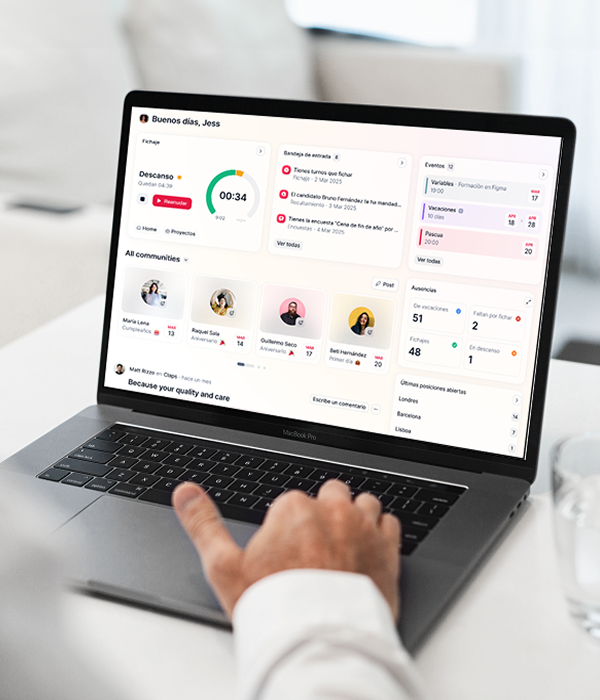
Modern applicant tracking platforms exist to close that gap. When candidate information lives in one centralised system, you can pull up time-to-hire, quality-of-hire, and offer-acceptance metrics whenever you need them, instead of chasing a status update from three different people. Factorial’s recruitment platform, for example, is built around exactly this kind of real-time funnel visibility, surfacing the metrics that let you intervene early rather than discovering a hiring bottleneck only after a critical role has sat vacant for months.
This isn’t about you micromanaging recruiters. It’s about giving yourself the same quality of insight into talent acquisition that you’d expect from any other strategic function you oversee.
Speed and Quality Are Not a Trade-Off. They're a Systems Problem
You’ve probably heard the line that you can either move fast or hire well, not both. In practice, that’s rarely the real trade-off. The actual trade-off is between disorganisation and structure. Slow, low-quality hiring processes are usually slow because they’re disorganised, not because speed and quality are opposed:
- Candidate information gets lost between email threads
- Interview feedback never gets consolidated
- Screening happens inconsistently from one hire to the next
The longer hiring becomes inconsistent, the more expensive mistakes become. Reducing the cost of bad hire scenarios isn’t about hiring faster at any cost; it’s about building a process that improves decision quality while shortening unnecessary delays.
Centralising the process changes the equation. When your recruiters and hiring managers share evaluation notes and schedule interviews from one platform instead of scattered channels, decisions get made faster because they’re better informed, not in spite of it. AI-assisted tools that help generate consistent job descriptions and tailored screening questions cut the time spent on repetitive groundwork, which frees up more time for the part of hiring that should never be rushed: judgement.
If you take one thing from this section, take this: a faster hiring process is not a corner being cut. Done properly, it’s evidence that your system is working the way it should.
Hiring Decisions Should Connect to the Org You're Actually Building
One of the most overlooked failures in recruitment is structural. Open roles get filled in isolation from the shape of the organisation they’re meant to serve. A role gets posted, a candidate gets hired, and only later does anyone ask whether that hire’s reporting line, team size, or scope actually matches where your business is heading.
Linking open positions directly to your org chart fixes this at the source. It keeps headcount planning, succession, and recruitment pointed at the same target, so every hire is a deliberate step toward the structure you’re trying to build, not just a reaction to whoever quit last month. If you’re thinking about scale, this is where your workforce planning actually lives.
What This Means for You
None of this requires you to start screening CVs yourself. It requires you to ask different questions of your hiring function, the same kind of questions you’d ask of any function with this much influence over your performance:
- What is your current time-to-hire, and is it improving or getting worse?
- Where in the funnel are you losing strong candidates?
- Can you see hiring activity against your org chart, or only against individual job openings?
- Is your hiring data centralised enough that you could pull a board-ready summary this week?
If those questions are hard to answer, you don’t have a people problem. You have a systems and visibility problem, and it’s solvable the same way you’d solve any other operational blind spot: with better infrastructure.
Recruitment software like Factorial’s applicant tracking system was built around that premise: improving visibility, increasing consistency, and reducing the cost of bad hire decisions before they impact performance. Not to replace your hiring managers’ judgement, but to give you the visibility, speed, and structural alignment that turns hiring from a recurring administrative task into a measurable, manageable part of your business.
The companies winning the talent race over the next decade won’t necessarily be the ones offering the highest salaries. They’ll be the ones led by people who understood early that controlling the cost of bad hire decisions is a strategic advantage.

Factorial Applicant Tracking System FAQs
Everything you need to know about our applicant tracking system.
Our ATS is an applicant tracking system designed to centralise and manage the recruitment process in one platform. It helps teams attract, evaluate, and hire candidates more efficiently while improving visibility across the hiring funnel.
Our ATS includes AI-enhanced features that help automate parts of recruitment, including generating job descriptions, creating tailored screening questions, organising candidate information, and reducing manual administrative work.
Yes. Recruiters and hiring managers can collaborate from one platform by sharing evaluation notes, coordinating interviews, and making hiring decisions with better visibility across the process.
Our ATS allows businesses to link open positions to their organisational structure, helping align hiring decisions with team growth and workforce planning.